
Beethoven’s captivating Moonlight Sonata, specifically its poignant first movement, is readily accessible through numerous PDF sheet music sources online, offering pianists a beautiful challenge;
The enduring popularity of this piece ensures a wealth of digital resources for learning and performance, catering to various skill levels and preferences.
From free options like Mutopia Project to premium platforms, finding the sheet music is remarkably straightforward, enabling widespread enjoyment of this iconic composition.
Historical Context of the Sonata
Beethoven’s Piano Sonata No. 14, affectionately known as the “Moonlight Sonata,” emerged in 1801, a period of significant personal turmoil for the composer. He was grappling with the devastating realization of his progressive hearing loss, a challenge that profoundly impacted his life and artistic output.
Dedicated to Countess Giulietta Guicciardi, a student with whom Beethoven was reportedly infatuated, the sonata diverges from the conventional sonata form of the time. Its unconventional structure and deeply emotive character reflect Beethoven’s evolving compositional style and his internal struggles.
Interestingly, the availability of sheet music, even in early formats, facilitated the sonata’s rapid dissemination and enduring appeal. Today, finding PDF versions of the first movement allows modern musicians to connect with this historical masterpiece and explore its emotional depth.
The “Moonlight” Nickname ー Origin and Meaning
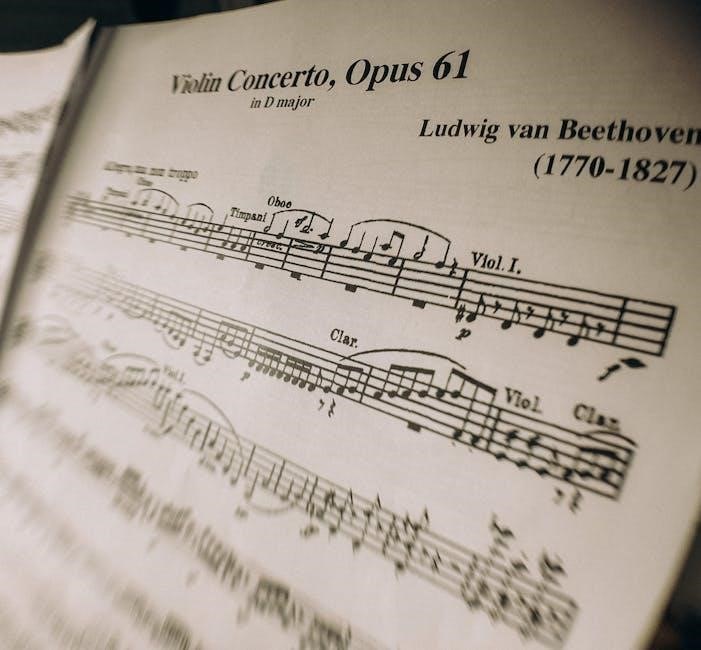
The evocative nickname “Moonlight Sonata” wasn’t bestowed by Beethoven himself. It originated after the composer’s death, in 1832, by the German music critic and poet Ludwig Rellstab. He likened the first movement’s ethereal and melancholic atmosphere to the shimmering light of the moon reflecting on Lake Lucerne in Switzerland.
This romantic imagery resonated deeply with audiences, and the name quickly stuck, overshadowing the sonata’s official title. The sheet music, even in its earliest printed forms, didn’t bear this moniker, but its association became firmly established through popular culture.
Today, readily available PDF versions of the first movement allow musicians to experience the very qualities that inspired Rellstab’s poetic description, continuing the legacy of this beloved nickname.

Finding Moonlight Sonata Sheet Music (1st Movement) in PDF Format
Numerous online resources offer Moonlight Sonata’s first movement sheet music in PDF format, ranging from free downloads to premium, professionally-arranged versions for pianists.
Free Sheet Music Sources Online
Accessing the Moonlight Sonata’s first movement sheet music without cost is surprisingly easy! Several websites specialize in providing public domain PDF scores. Mutopia Project (www.mutopiaproject.org) is a fantastic resource, offering typeset scores meticulously prepared for accuracy.
IMSLP (International Music Score Library Project) also boasts a comprehensive collection, including various editions of Beethoven’s sonata. These sites rely on community contributions, ensuring a continually expanding library.
However, be mindful of the score quality; some free versions may contain errors or be poorly formatted. Always compare with recordings to verify accuracy. Websites offering free downloads often include advertisements or require registration, but provide convenient access to this beloved piece.
Premium Sheet Music Websites ⏤ Benefits and Costs
Premium sheet music websites, like Musicnotes.com and Sheet Music Plus, offer high-quality PDF versions of the Moonlight Sonata’s first movement. These typically range from $5 to $15, depending on the arrangement and publisher.
Benefits include professionally engraved scores, often with adjustable page layouts and transposition options. Many sites offer printable versions with clear fingerings and pedal markings, enhancing the learning experience.
Furthermore, premium sites often provide access to backing tracks and playback features. While requiring a financial investment, the improved clarity, accuracy, and additional learning tools can be invaluable, especially for serious students seeking a polished and reliable resource.
Legality and Copyright Considerations
Downloading Moonlight Sonata sheet music in PDF format requires careful attention to copyright law. Beethoven’s compositions are in the public domain, meaning the original works are free to use. However, specific arrangements, editions, and fingerings are often protected by copyright.

Free sources like the Mutopia Project offer legally sound transcriptions. Conversely, unauthorized PDFs found on some websites may infringe on copyright. Purchasing from reputable vendors ensures compliance and supports music publishers.
Always verify the source’s legitimacy before downloading. Using copyrighted material without permission is illegal and unethical. Respecting intellectual property rights is crucial for sustaining the music community.
Understanding the Sheet Music
PDF versions of the Moonlight Sonata’s first movement reveal a deceptively simple score, demanding nuanced interpretation of its key, time, and expressive markings.
Careful observation of these elements unlocks the emotional depth within Beethoven’s masterpiece.
Key Signature and Time Signature
Examining the sheet music PDF reveals the first movement is written in C-sharp minor, indicated by seven sharps in the key signature. This key contributes to the piece’s melancholic and introspective character.
The time signature is 4/4, common time, but Beethoven employs a subtle rhythmic freedom that transcends strict metrical adherence. The PDF clearly displays this, though capturing the fluidity requires attentive listening and practice.
Understanding these foundational elements – the key’s inherent mood and the time signature’s underlying pulse – is crucial for a sensitive and informed performance. The sheet music provides the visual roadmap, but musicality breathes life into it.
Players should note the consistent presence of the key signature throughout, reinforcing the harmonic foundation of the piece.

Tempo Marking: Adagio Sostenuto
The sheet music PDF prominently displays “Adagio sostenuto” as the tempo marking, directing performers to play at a slow, sustained pace. “Adagio” indicates a slow tempo, while “sostenuto” emphasizes a prolonged, held-out quality.
This isn’t merely about slowness; it’s about creating a sense of timelessness and profound emotional depth. The PDF doesn’t dictate a precise BPM, leaving room for interpretation, but the feeling should be one of serene contemplation.
Successfully conveying this requires careful attention to phrasing and dynamics. Resist the urge to rush; allow each note to resonate and blend into the next. The sheet music serves as a guide, but the true tempo lies in the feeling.
Maintaining this delicate balance is key to capturing the essence of the movement.
Dynamic Markings and Expression
Examining the Moonlight Sonata’s sheet music PDF reveals a subtle yet crucial range of dynamic markings. Predominantly, the piece resides in the piano (p) and pianissimo (pp) ranges, fostering an intimate and reflective atmosphere.
However, the PDF also includes carefully placed crescendos and diminuendos, urging nuanced shaping of phrases. These aren’t dramatic swells, but gentle undulations that enhance the emotional narrative.
The absence of forceful markings encourages a delicate touch and a focus on voicing. The sheet music implicitly demands expressive pedaling to connect harmonies and create a wash of sound.
Interpreting these markings requires sensitivity and a deep understanding of Beethoven’s intent – a quiet, introspective beauty.
Technical Aspects of Playing the 1st Movement
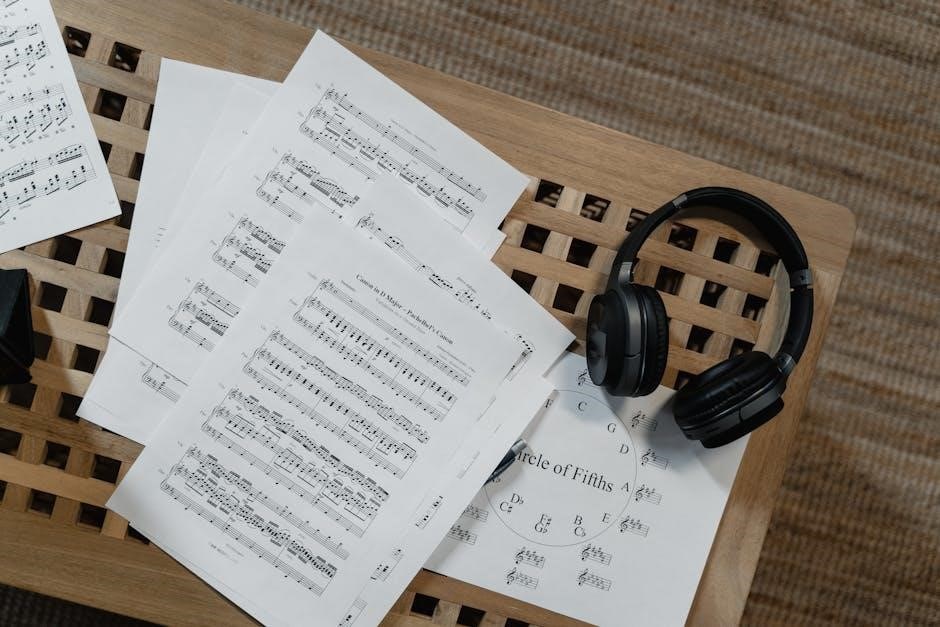
Sheet music PDF analysis reveals the Moonlight Sonata demands careful hand positioning, delicate arpeggios, and masterful pedaling for a smooth, ethereal sound.
Hand Positions and Fingerings
Sheet music for the Moonlight Sonata’s first movement, often available as a PDF, highlights the importance of a relaxed, curved hand position. The consistent arpeggiated figures require careful fingering to ensure smoothness and avoid tension.
Beginners should prioritize clear finger placement, utilizing the suggested fingerings found in many editions. Observe how the PDF sheet music indicates finger numbers above the notes; these are crucial for navigating the piece efficiently.
Maintaining a consistent hand shape and avoiding excessive wrist movement are key. The left hand primarily focuses on sustained chords, demanding a stable position, while the right hand’s arpeggios benefit from fluid finger transitions. Practicing slowly with deliberate fingering builds accuracy and control.
Pedaling Techniques – Importance and Notation
The Moonlight Sonata’s ethereal quality heavily relies on skillful pedaling, clearly indicated in most PDF sheet music editions. The sustain pedal creates the characteristic wash of sound, blending the arpeggiated figures and harmonic richness.
Sheet music often uses abbreviations like “Ped.” to denote pedal down and a line to indicate the duration. Careful attention to these markings is vital; releasing and reapplying the pedal at precise moments prevents muddiness.
Beginners should practice coordinating pedal changes with hand movements. The goal is a seamless connection between chords and arpeggios, avoiding abrupt breaks in the sound. Experimenting with half-pedaling can further refine the texture, adding subtle nuances to the performance.
Arpeggio Execution and Smoothness
The first movement of the Moonlight Sonata is defined by its flowing arpeggios, readily apparent in any PDF sheet music version. Achieving a truly legato and seamless sound requires focused practice and attention to detail.
Avoid a choppy or detached articulation; instead, strive for a continuous, wave-like motion. Fingering choices, often suggested in annotated sheet music, are crucial for smooth transitions between notes.
Practice slowly, concentrating on evenness of touch and consistent timing. Utilize wrist rotation to facilitate the arpeggios, minimizing tension in the hand and arm. The goal is to create a hypnotic effect, where each arpeggio blends into the next, enhancing the piece’s dreamy atmosphere.

Analyzing the Musical Structure
Sheet music reveals the first movement employs a modified sonata form, showcasing Beethoven’s innovative harmonic language and melodic development, creating a deeply emotive experience.
Form: Modified Sonata Form
Sheet music analysis demonstrates Beethoven’s first movement deviates from traditional sonata form, presenting a unique structure. Typically, sonata form includes exposition, development, and recapitulation. However, the Moonlight Sonata largely omits a conventional development section.
Instead, the piece features a continuous, flowing structure where thematic material is subtly transformed and revisited within the exposition and a modified recapitulation. This creates a dreamlike, introspective quality. The PDF scores clearly illustrate this departure, showing a focus on harmonic color and sustained melodic lines rather than dramatic thematic contrast.
The absence of a strong development section contributes to the movement’s overall sense of tranquility and emotional depth, making it a captivating study in musical form.
Melodic Development and Themes
Examining the sheet music reveals the first movement’s melodic core centers around a simple, descending motif. This theme, presented initially in the right hand, is subtly developed throughout the piece, appearing in varied registers and harmonic contexts.
Beethoven masterfully employs ornamentation and arpeggiation to enrich this core melody, creating a sense of continuous unfolding. The PDF scores highlight how the left hand provides a gently undulating accompaniment, supporting and enhancing the melodic line.
Rather than dramatic thematic contrast, the movement emphasizes subtle variations and harmonic shifts, building emotional intensity through nuanced melodic development. This creates a deeply expressive and introspective musical experience.
Harmonic Progression and Chord Voicings
The Moonlight Sonata’s first movement, as displayed in available PDF sheet music, is characterized by a predominantly somber harmonic palette. It largely resides in C# minor, utilizing frequent use of diminished chords and suspensions to create a melancholic atmosphere.
Analyzing the sheet music reveals Beethoven’s innovative chord voicings, often employing close positions and subtle inversions. These choices contribute to the movement’s ethereal and delicate sound. The harmonic progression isn’t complex, but its emotional impact is profound.
The consistent use of pedal tones and arpeggiated figures further emphasizes the harmonic foundation, creating a hypnotic and dreamlike quality readily apparent when studying the score.

Resources for Learning the Piece
Numerous online tutorials and video lessons, alongside readily available Moonlight Sonata sheet music in PDF format, greatly assist learning this beautiful piece.
MIDI files and playback software further enhance practice, offering a comprehensive learning experience for aspiring pianists.
Online Tutorials and Video Lessons
YouTube is a treasure trove of resources for learning the Moonlight Sonata’s first movement, offering a diverse range of tutorials catering to different learning styles. Many pianists share detailed walkthroughs, focusing on specific sections and techniques.
These videos often complement the PDF sheet music by visually demonstrating fingerings, pedaling, and expressive nuances. Platforms like Flowkey and Skoove provide interactive lessons, syncing the sheet music with real-time feedback as you play.
Websites dedicated to piano instruction, such as Hoffman Academy, also feature lessons covering Beethoven’s works. Utilizing these resources alongside the PDF allows for a more comprehensive and engaging learning experience, bridging the gap between notation and performance.
Don’t hesitate to explore various instructors to find a teaching style that resonates with you.
Sheet Music with Fingering Suggestions
Many PDF versions of the Moonlight Sonata’s first movement sheet music include pre-marked fingerings, a significant aid for students and intermediate players. Websites like Musicnotes;com and Sheet Music Plus offer editions with detailed fingering suggestions, streamlining the learning process.
These annotations can help navigate the challenging arpeggios and chord voicings, promoting efficient hand positioning and smoother transitions. Free-scores.com also provides options, though fingering may be less consistent across different uploads.
However, remember that fingerings are often subjective; experiment to find what feels most comfortable and natural for your hands. Consider supplementing with instructional videos that demonstrate alternative fingerings for specific passages, enhancing your technical control and musicality.
MIDI Files and Playback Software
Alongside PDF sheet music for the Moonlight Sonata’s first movement, MIDI files are widely available online. These files allow you to hear the piece played back by a computer, aiding in understanding the rhythm and phrasing. Websites offering free downloads include various sheet music repositories.
Utilize playback software like MuseScore or GarageBand to adjust the tempo and isolate specific sections for focused practice. While a MIDI file isn’t a substitute for a live performance, it’s a valuable tool for ear training and identifying potential difficulties.
Remember that MIDI sounds can be artificial; prioritize listening to professional recordings alongside the playback to develop a nuanced musical interpretation.

Common Challenges and Solutions
Sheet music for the Moonlight Sonata’s first movement presents challenges like maintaining tempo and achieving a legato touch; practice slowly and deliberately for success.
Maintaining a Consistent Tempo
Maintaining a steady tempo in the Moonlight Sonata’s first movement, even with sheet music readily available in PDF format, proves surprisingly difficult for many pianists. The piece’s hypnotic quality and sustained chords can easily lead to unintentional slowing or rushing.
A helpful technique involves utilizing a metronome during practice, starting at a very slow speed and gradually increasing it as comfort grows. Focusing on the underlying pulse, rather than individual notes, is crucial.
Furthermore, subdividing the beat mentally – thinking in eighth or sixteenth notes – can provide a stronger internal framework. Regularly recording yourself playing and critically listening back will reveal any inconsistencies in tempo, allowing for targeted adjustments. Remember, patience and deliberate practice are key!
Achieving a Legato Touch
Achieving a truly legato touch is paramount when performing the Moonlight Sonata’s first movement, even when utilizing readily available PDF sheet music. The piece demands a seamless connection between notes, creating a flowing, ethereal sound.
Focus on minimizing any discernible gaps between each note, utilizing a relaxed wrist and arm motion. Imagine ‘connecting’ each key to the next before it’s struck. Slow, deliberate practice is essential; rushing will only exacerbate any choppiness.
Experiment with subtle finger weight and carefully coordinate your pedal work to further enhance the legato effect. Listening to recordings of accomplished pianists can provide valuable insight into the desired phrasing and smoothness.
Interpreting the Emotional Depth
Beyond simply playing the notes from the PDF sheet music, conveying the profound emotional depth of the Moonlight Sonata’s first movement requires sensitive interpretation. Beethoven intended a deeply expressive and melancholic atmosphere.
Consider the historical context and the piece’s nickname – “Quasi una fantasia” suggests a free, improvisational quality. Don’t be afraid to subtly vary tempo and dynamics to reflect the ebb and flow of emotion.
Pay close attention to the phrasing and allow the melody to ‘breathe’. Focus on creating a sense of longing and introspection. Ultimately, the goal is to communicate the piece’s inherent beauty and vulnerability to the listener.